What Is Real Liquorice?
Most of what the world calls liquorice has never met the plant. A short natural history of a misunderstood root — and how to tell the real thing from its impostor.
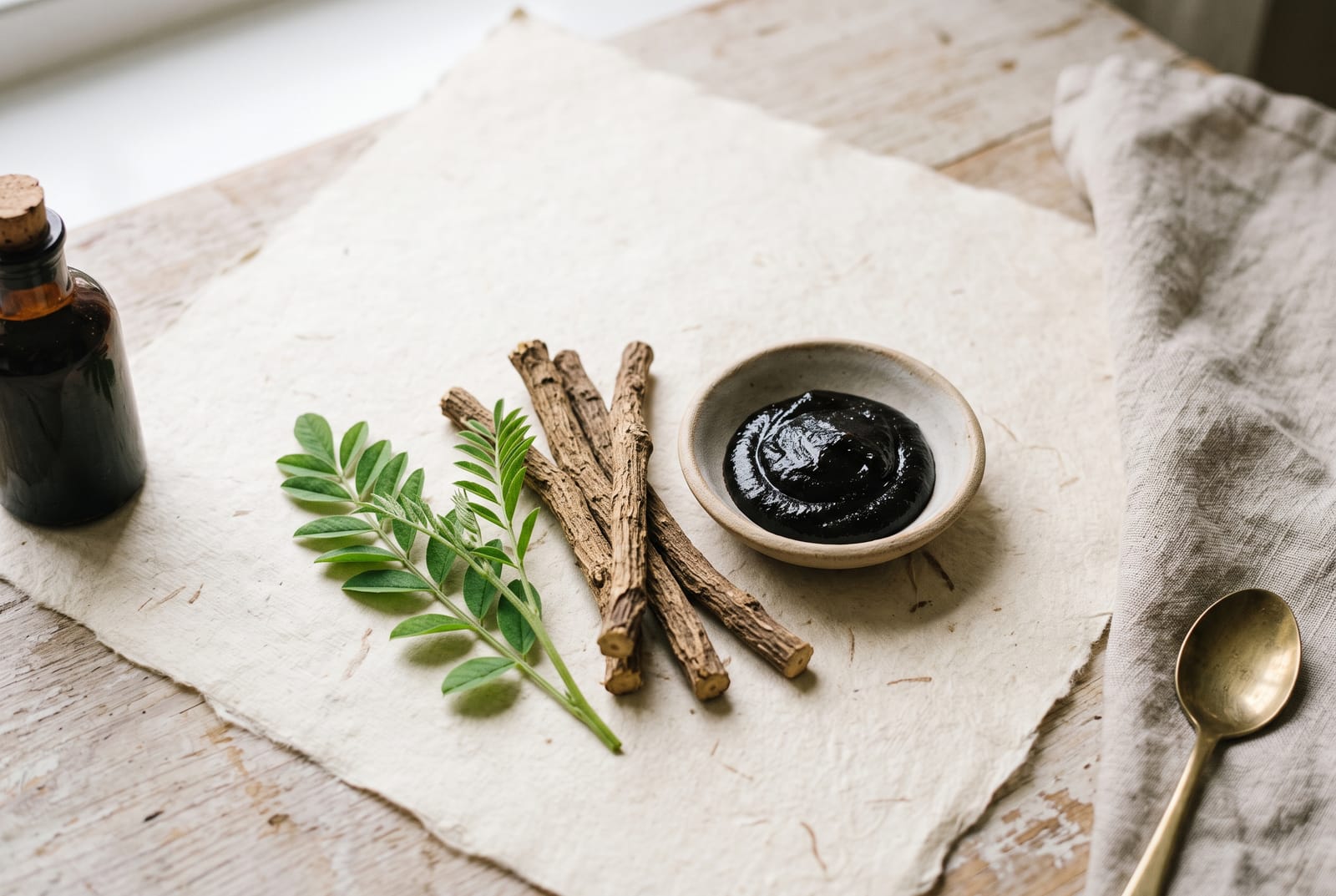
Liquorice begins underground, which may be the least glamorous start of any confectionery. The plant itself — Glycyrrhiza glabra, an unassuming member of the pea family — grows wild from southern Europe across to Asia, and above ground it would not stop you on a walk. The part that matters is below: long, woody roots that snap to reveal a pale yellow interior, and a flavour that is naturally, insistently sweet.
The name gives it away. Glycyrrhiza comes from the Greek for “sweet root”, and for centuries that is exactly how it was enjoyed — cut into sticks and chewed as it was. Confectionery came later. Simmer the roots, press them, reduce the liquor slowly, and you are left with a dense, glossy black extract. Fold that extract into flour, sugar and gentle heat, and you arrive at the soft black liquorice of Europe: the sweet our founder grew up with, and the starting point for everything we make.
The impostor in the sweet aisle
Here is the quiet scandal of the category: a great deal of what is sold as liquorice contains no liquorice at all. The usual stand-in is anise — a small seed with an aromatic note close enough to fool a hurried palate. There is nothing wrong with anise. It is a lovely spice. But it can only imitate the opening of the flavour, not the rest of it. Anise gives you the aroma; the root gives you the depth and, crucially, the finish — that long, rounded darkness that continues well after the sweet is gone.
Taste them side by side and the difference is unmistakable. The anise version arrives all at once and leaves the same way. Real liquorice unfolds: sweetness first, then something warmer and faintly herbal, then a slow fade that sits closer to espresso or dark chocolate than to anything from the candy shelf.
How to read a label
You do not need trained tastebuds to protect yourself — just the ingredient list. Look for liquorice extract named plainly, and be wary when the only flavour mentioned is anise or “natural flavouring”. Position matters too: an extract listed near the top of the list is doing real work; one listed last is a rumour.
Our own labels are deliberately unexciting reading. Every pack declares the liquorice extract, the sweetness, the salt and everything else — including the wheat flour that gives soft liquorice its traditional texture, which is worth knowing if you avoid gluten. Transparency is not a marketing flourish here; in a category built on imitation, it is the whole point.
Why the root deserves the trouble
Real extract is slower to work with. It demands longer cooking, more careful balancing, and a respect for its intensity — this is not a flavour you can rush or drown. But it is also the entire reason liquorice has held Northern Europe’s affection for generations. No seed, however aromatic, has ever managed that.
So the next time something calls itself liquorice, ask it the only question that matters: have you actually met the root? Ours has. Every batch, every time.