How to Taste Liquorice
Liquorice is a slow flavour in a fast-snack world. Taste it the way it was designed to be tasted, and it becomes a different sweet entirely.
Most sweets are built for speed. They arrive loud, peak instantly and vanish without a trace — which is fine, because that is their job. Liquorice has a different job. It is a long flavour: it opens quietly, builds as you chew, and leaves a finish that can outlast the piece itself by minutes. Eat it like ordinary candy and you experience only the first act. Taste it properly and you get the whole play.
The good news is that tasting properly requires no equipment and no expertise. Just an order, a pace, and a little patience.
Start in the right place
Every piece we make carries an intensity — Gentle, Balanced, Bold or Intense — and the single most common mistake a newcomer makes is starting at the wrong end. A first encounter with salt-forward liquorice is like a first coffee being a triple ristretto: memorable for the wrong reasons. Begin gentle. Caramel and chocolate creations were designed to be doors, and they open easily.
The four steps
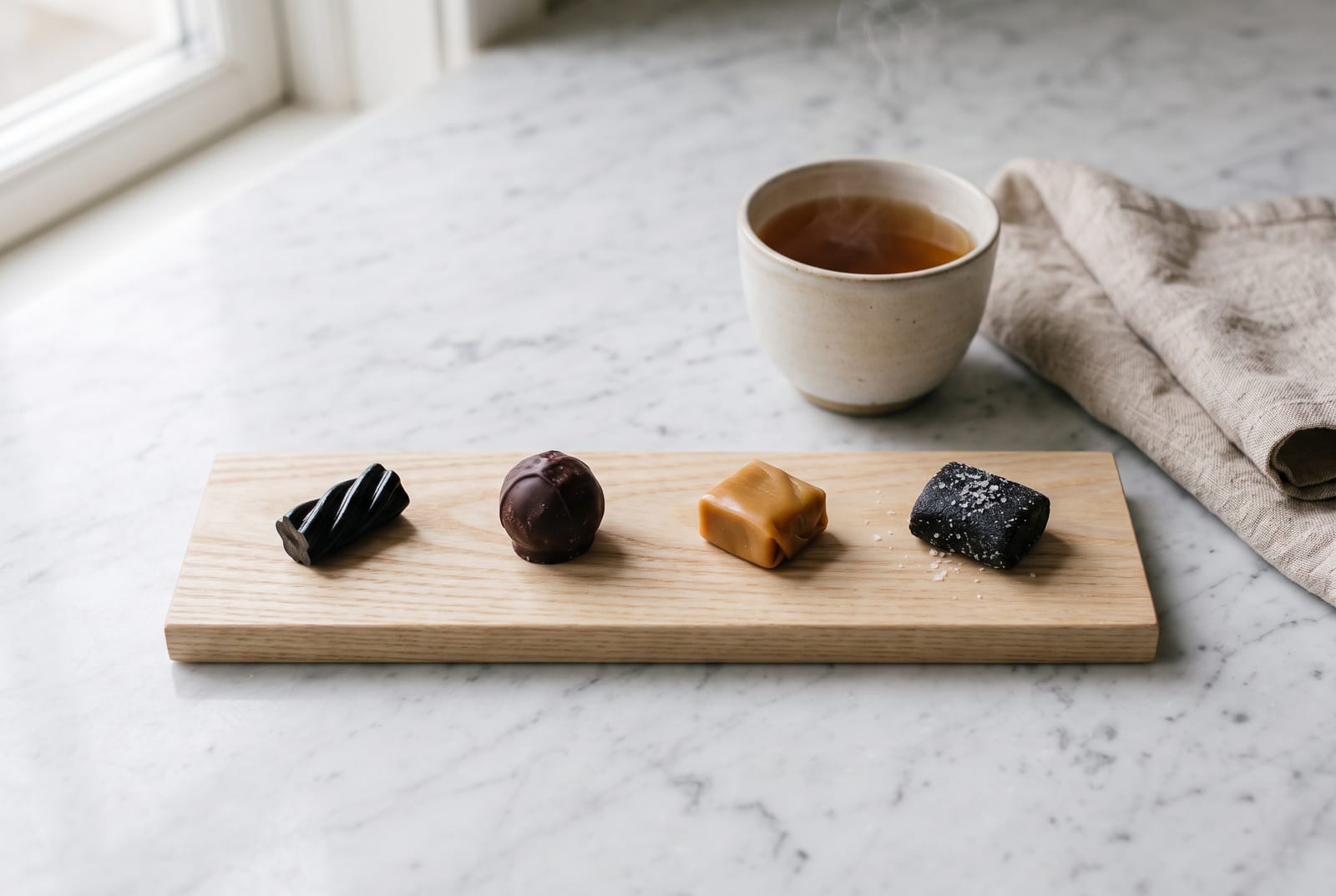
Look first. Good liquorice is matte, dense and dark. Notice the cut surface — the chocolate shell, the caramel seam, the pure black centre. You are learning what the texture will do before it does it.
Chew slowly. This is the whole trick, honestly. Texture arrives first — the soft give, the resistance — and the flavour unfolds behind it in layers. Rushing collapses those layers into one dark note and wastes the best part.
Note the finish. What lingers after you swallow is the truest measure of a liquorice. A gentle piece fades warm and sweet; a bold one keeps talking. The finish tells you where you are on the scale — and whether you are curious about the next step.
Rest between tastes. A sip of water, unsweetened tea or black coffee resets the palate. Coffee, in particular, is liquorice’s natural companion — the roasted bitterness and the root’s dark sweetness flatter each other shamelessly.
Climb at your own pace
Nobody graduates from the intensity ladder, and nobody needs to. Some people find their home at Gentle and stay there happily for life. Others discover, three tastings in, that they have somehow become the sort of person who keeps Salty Black in a desk drawer. Both outcomes are correct. The scale is a map, not a syllabus.
If you would like the map with the route already drawn, that is precisely what the Discovery Box is for: all four intensities in one deliberate order, with a tasting card to walk you through. One sitting, one unhurried hour, and you will know more about your own taste than most people ever learn about liquorice.
Slow down. The root has waited this long — it can wait another few minutes while you pay attention.